
A grand juror · one week after the panel declined to indict
“I heard this case like last week and I thought it was a crock of shit then and I still think it is.”
Grand-jury transcript, Oct. 16, 2025 · Tr. 10:11–13.Read in viewer ↗Public record ↗
The Case · USA v. Rabbitt et al. · No. 25 CR 693
On the morning of May 21, 2026, the federal felony case against Kat Abughazaleh, Michael Rabbitt, Andre Martin, Catherine Sharp, Brian Straw, and Joselyn Walsh ended. The U.S. Attorney moved to dismiss every remaining charge with prejudice. The trial scheduled for the following week never happened. The problem Judge Perry said she found the most problematic was not any one of the grand-jury abuses. It was that they were hidden from the court. “What you do not do,” she said, “is hide it.” Per CBS Chicago, NBC5, and Sun-Times reporting, the prosecutors' own office acknowledged the case was “tainted by misconduct.” Seven months of federal prosecution, vacated.
That collapse is also the foundation of the eligibility argument this site makes. The federal court's identification of grand-jury misconduct is itself the “improper and unlawful” conduct DOJ's Anti-Weaponization Fund language says it covers — by their own words. Read the argument →
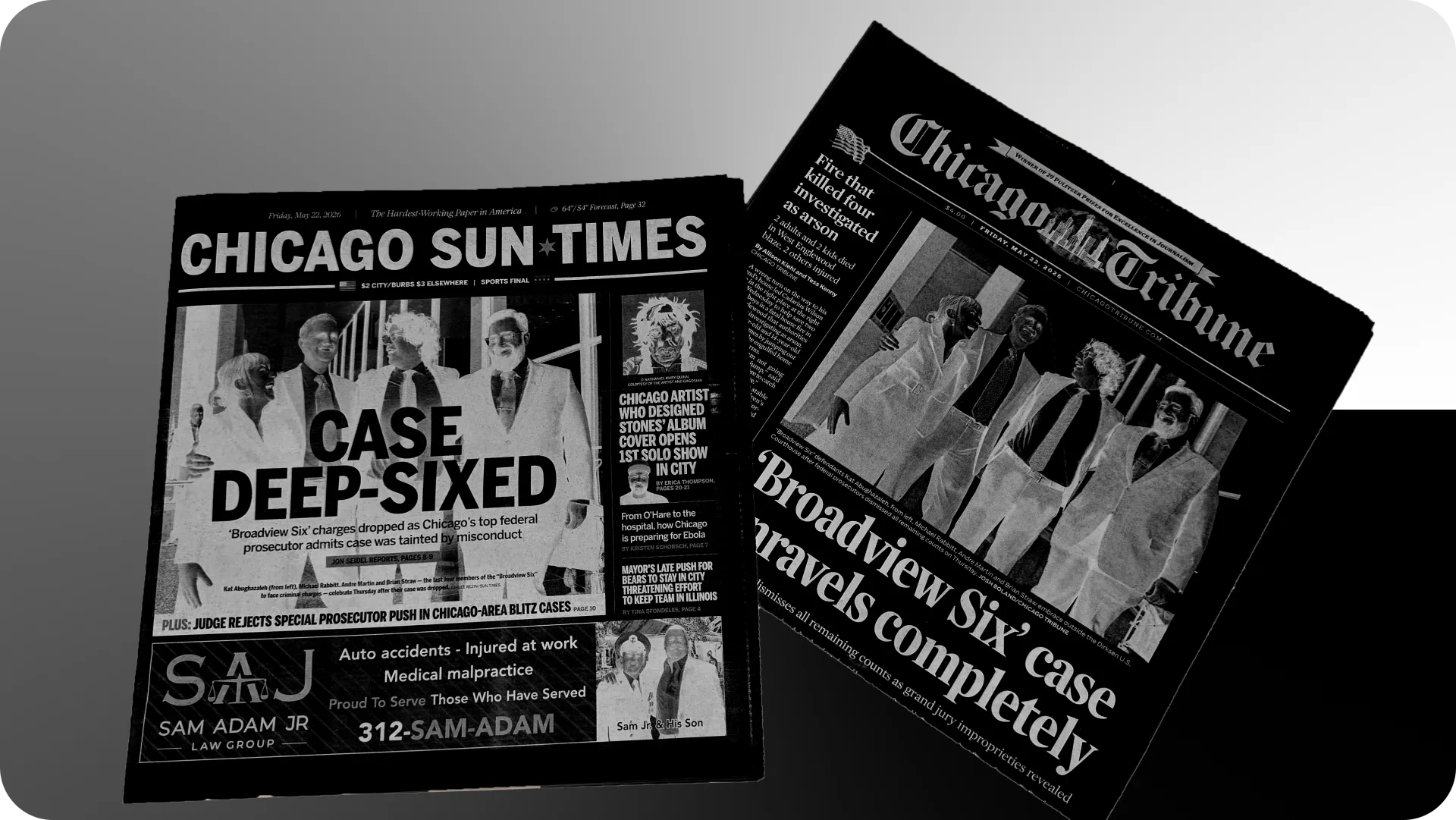
The Broadview Six
The case is officially captioned in Michael Rabbitt's name — he is the lead-named defendant. Kat Abughazaleh is the most publicly prominent of the six. The site is named for the legal standard the case turns on — a prosecution that is vexatious, frivolous, or in bad faith — not for any one defendant. All six are named below, in the order the court caption lists them.
Lead-named defendant
Named first in the official court caption — the case is *USA v. Rabbitt et al.*, No. 25 CR 693. Has a public legal-defense GoFundMe in his own name, explicitly tying his charges to the Broadview ICE protest and the May 2026 dismissal.
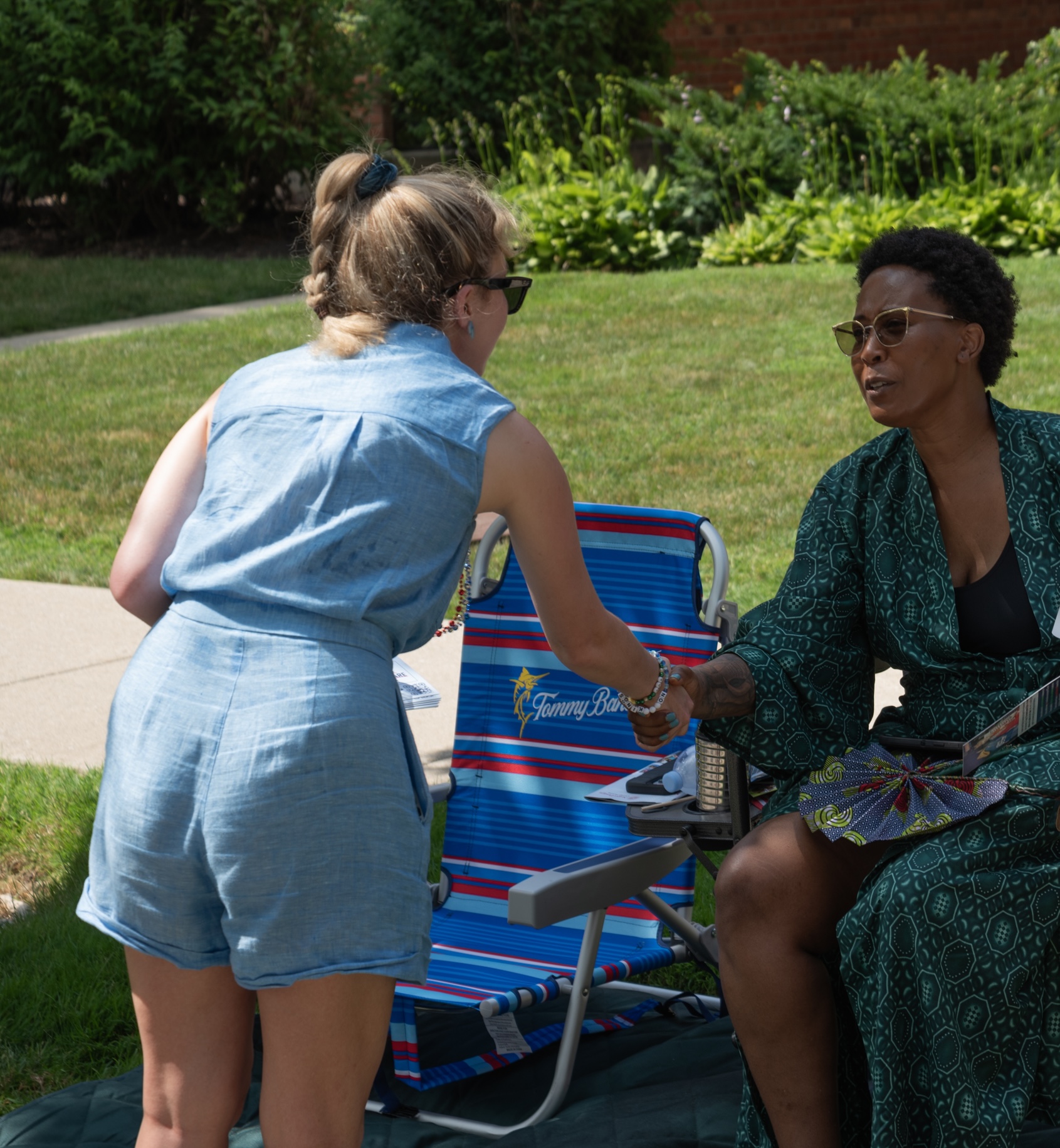
Journalist; 2026 IL-09 Democratic candidate
Journalist who has covered the far right at Media Matters for America, Mother Jones, and Zeteo News. Was 26 at the time of the indictment. Ran in the 2026 Illinois 9th Congressional District Democratic primary and finished second to Evanston Mayor Daniel Biss on March 17, 2026 — mid-prosecution. The most publicly prominent of the six.
Field director, Abughazaleh campaign
Field director on Kat Abughazaleh's congressional campaign and co-beneficiary of the legal-defense fundraiser she organized.
Defendant
Co-defendant. The Fund Brief notes the co-defendants include a Democratic ward committeeperson and a candidate for county office, but does not assign those roles to specific names; pending a primary source, the site does not either.
Oak Park village trustee
Co-defendant. Per his own public legal-defense page, an Oak Park village trustee.
Defendant
Co-defendant. Public role not yet sourced.
2025-09-26
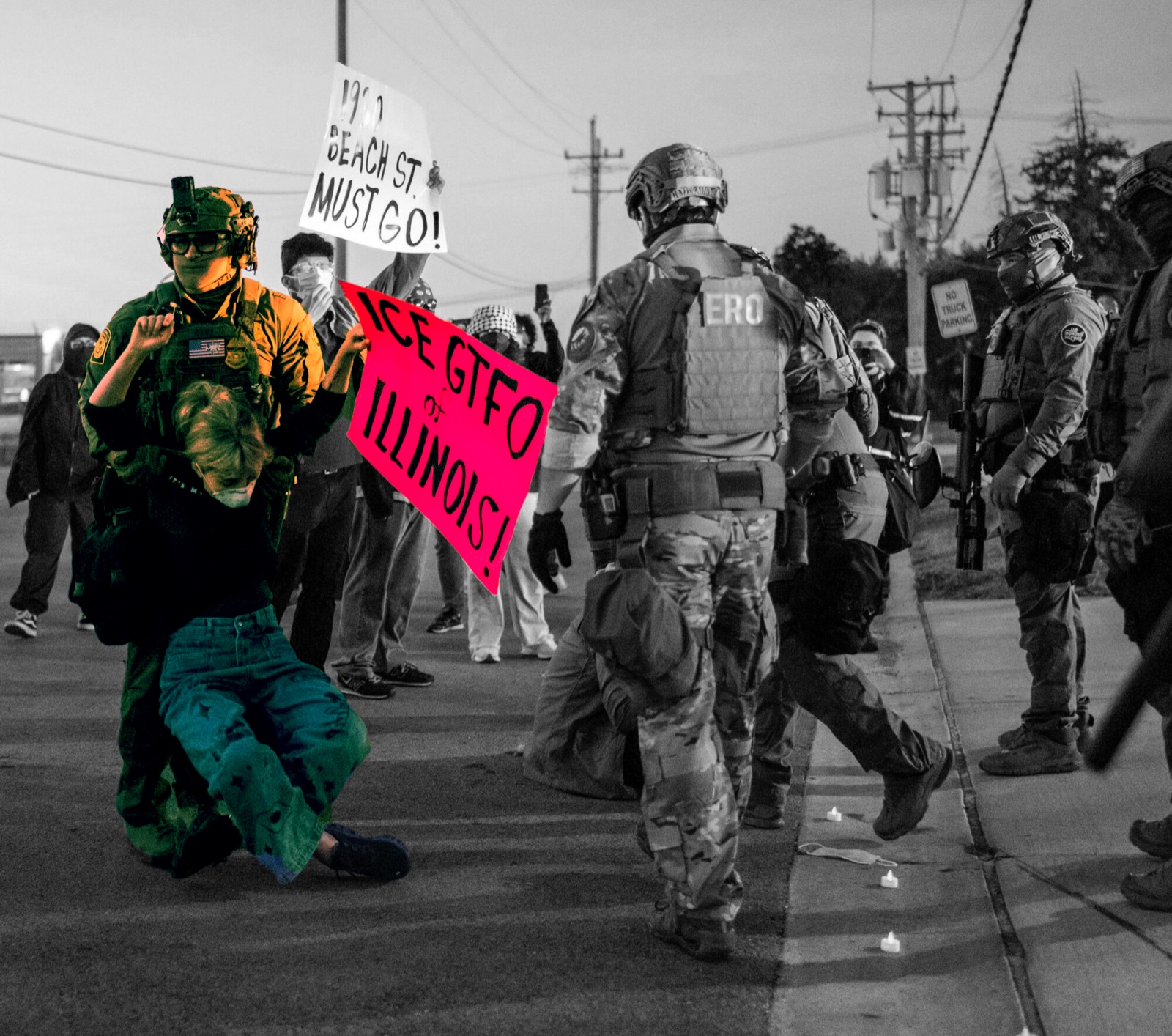
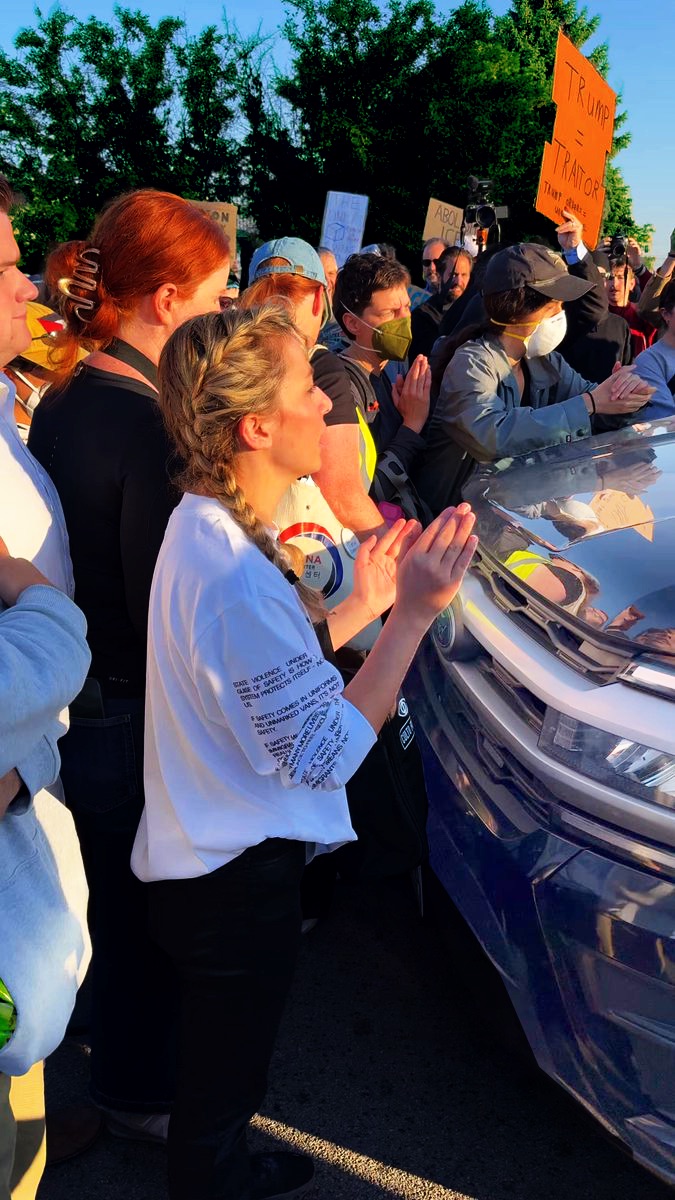
On September 26, 2025, the six joined a protest outside the Immigration and Customs Enforcement facility in Broadview, Illinois. The protest was directed at Operation Midway Blitz, the federal deportation campaign then underway in the Chicago area.
Showing up to a protest is, on its own, a constitutionally protected activity. That fact does some heavy lifting later, both in the legal defense of the case and in the argument that the prosecution targeted protected speech. The federal government would, eight months later, walk away from its own case. What happened in between is what this page is about.
2025-10-29 · the indictment
On October 29, 2025, a federal grand-jury indictment was unsealed. It charged the six with felony conspiracy to impede a federal officer (18 U.S.C. § 372, carrying a six-year statutory maximum) and with forcibly impeding a federal officer (18 U.S.C. § 111(a)(1)), charged together with aiding and abetting (18 U.S.C. § 2). The defendants pleaded not guilty.
Per WBEZ and NBC News on the day the indictment was unsealed, Kat publicly called it “a political prosecution and a gross attempt at silencing dissent.” The case landed before U.S. District Judge April M. Perry of the Northern District of Illinois — a judge who, three weeks earlier on October 9, 2025, had ruled against the federal government in the National Guard deployment case (State of Illinois v. Trump, No. 1:25-cv-12174, N.D. Ill.), entering a TRO that found (per WBEZ's same-day reporting) the administration's “perception of events” around Chicago to be “simply unreliable.”
The charged statutes are confirmed from the indictment itself — page 1 lists 18 U.S.C. §§ 111(a)(1), 372 and 2 (the § 111(b) felony was never charged). Case number 25 CR 693 (full docket No. 1:25-cr-00693) is confirmed from the official transcript caption.
The full timeline
The campaign, the prosecution, and the Anti-Weaponization Fund all unfold on the same calendar. Kat was running for Congress the entire time. The Fund is announced three days before the dismissal. The claims window was set to close in December 2028 — but a court blocked the Fund before it opened. The strongest charge was dropped — and the case dismissed — only after the primary was over.
What the court found · 2026-05-21
Before the sealed hearing on May 21, Judge Perry had reviewed the grand-jury transcripts the defense had spent weeks trying to obtain. The transcripts produced to the court were heavily redacted. The hearing itself was closed at the government's request, over press objections. By the time it ended, the case was over.
Judge Perry identified that an Assistant U.S. Attorney had improperly placed “her personal credibility and trustworthiness on the line in support of the charges” before the grand jury (transcript p. 22). On the dismissal record, the junior prosecutor, AUSA Matthew Skiba, identified that senior prosecutor as Sheri Mecklenburg, “a 20-years-plus senior veteran” he was second-chairing, and conceded the vouching was “at a minimum, arguably misconduct” (transcript p. 31).
The site reports what the court and the prosecutors said on the record; it does not assert that Mecklenburg personally committed each of the court's four findings.
Grand jurors who “disagreed with the government's case” were removed. A grand jury is supposed to be a check on the prosecutor. Excluding the ones who push back removes the check.
Improper substantive communications with grand jurors took place outside the grand jury room — outside the procedural guardrails the Fifth Amendment grand-jury right depends on.
Judge Perry enumerated four problems with the grand-jury proceedings. The fourth — the one she said she found “the most problematic” — was that the other three were redacted out of the transcripts produced to the court. The conduct was not just committed; it was concealed. In her words: “What you do not do is hide it.”
Transcript p. 23 (Hon. April M. Perry).
This account comes from the government's own colloquy at the dismissal hearing, not from Judge Perry's findings. AUSA Skiba described it on the record: at its first session the grand jury returned a “no bill” — a refusal to indict. The government did not go to a fresh grand jury. The same body was brought back, with some jurors having walked out or been excused, and on a later session it returned the indictment.
Transcript pp. 32–33 (AUSA Skiba colloquy). The court separately noted infirmities in the legal instructions given to the first grand jury (transcript p. 20).
CBS Chicago, NBC5, and the Chicago Sun-Times reported, via defense counsel, that Judge Perry said she had never seen anything worsein a career of reviewing grand-jury transcripts — and that the U.S. Attorney's office had acknowledged the case was “tainted by misconduct.”
That summary is reported speech. On the record at the same hearing, U.S. Attorney Boutros said there was “no deliberate misconduct” on the part of the prosecutors and that he had been upset by what the transcripts showed, “which is why we did dismiss that indictment”; AUSA Skiba narrower-still on the same record conceded the prosecutor's vouching to the grand jurors was “at a minimum, arguably misconduct” (transcript pp. 50, 53, 31). The transcript's own language is below — verbatim, with page:line citations.
The Broadview Six argue that the findings together fall within the structural-compromise class the Supreme Court distinguished from ordinary grand-jury error in Bank of Nova Scotia v. United States, 487 U.S. 250, 256–57 (1988): where the structural protections of the grand jury have been so compromised as to render the proceedings fundamentally unfair, prejudice is presumed without a case-by-case showing. That is a contested extension, not settled ground — Bank of Nova Scotia's default rule requires a showing of prejudice (it reversed a dismissal for grand-jury misconduct), and its named examples of presumed prejudice are narrower than this record: racial discrimination in selecting grand jurors (Vasquez) and the exclusion of women (Ballard). The firmer ground does not need the presumption at all. Under Bank of Nova Scotia's own default test, a dismissal is warranted where the violation “substantially influenced the grand jury's decision to indict.” Here the first grand jury returned a no bill and the charge issued only after re-presentation — a concrete, on-record link between the misconduct and the decision to indict. See /the-fund Claim (d).
Interactive · weigh in
Your read of the record
No tallies here. We can't count readers yet, and we won't invent numbers. This asks how you read the record, and it answers back.
Where this goes
Your answer stayed on your device. Nothing was sent, because there is nowhere to send it yet. We won't show you a tally we didn't count. The live version is designed: counts of how readers weigh these arguments, shown once they exist, and the grand-jury transcripts put through the same receipt-checked reading. Funding decides how fast that arrives. This wiki is one person and a public repo.
This funds the wiki, not the Broadview Six. Their defense funds are separate.
The court record · on her own bench, in her own words
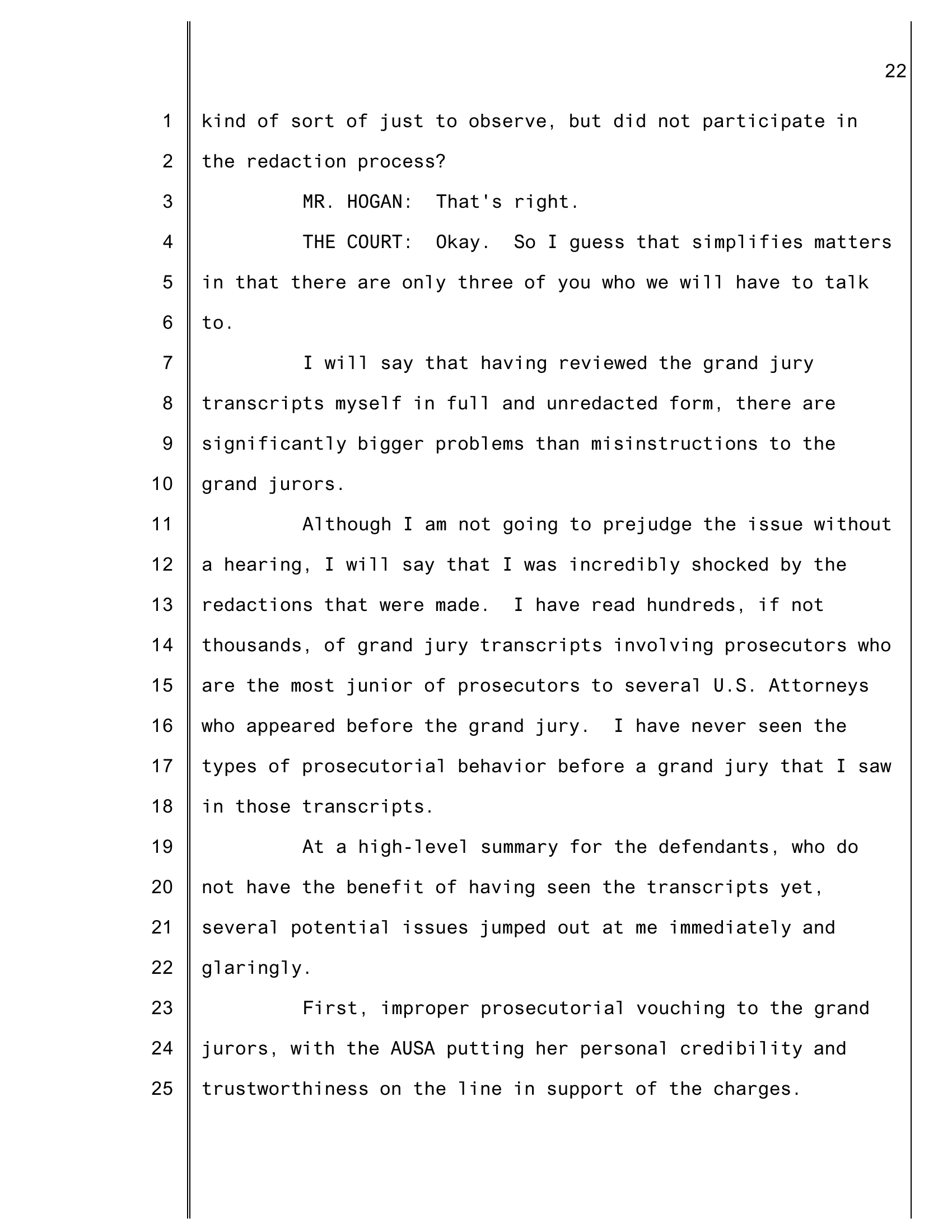
The line news outlets paraphrased as “never seen anything worse” is in the official transcript, on page 22, lines 16–18. This is the verbatim language. Not a summary. Not a quote relayed second-hand. The Court's own words, captured by the court reporter, in the public record of the dismissal hearing.
“I have never seen the types of prosecutorial behavior before a grand jury that I saw in those transcripts.”
“That trust has been broken.”
“Mistakes happen. They happen to all of us. But as I tell my children, you own it. You admit to it. You apologize for it, and you move on. What you do not do is hide it.”
On the record about the Fund, too
On page 40 of the same transcript, defense counsel told Judge Perry, in open court: “There is a weaponization fund that I think we are now eligible for. And I think people need to see what this DOJ is doing.” The Broadview Six's eligibility argument is already on the public record of the dismissal hearing.
The grand-jury transcripts · unsealed June 9, 2026
For months the grand-jury record sat under seal. On June 9, 2026, on the court's order, the redacted transcripts of the three October 2025 sessions went onto the public docket — about two hundred pages. Reading the whole thing is its own piece of work, and it is coming. Three moments need no setup. Each is the record's own words, linked to the public court file. We quote them; we do not re-post the transcripts here.
A grand juror · one week after the panel declined to indict
“I heard this case like last week and I thought it was a crock of shit then and I still think it is.”
Grand-jury transcript, Oct. 16, 2025 · Tr. 10:11–13.Read in viewer ↗Public record ↗
The prosecutor · on the record at the third session
“I'm the one who knows the rules, and I did something today that I'm not supposed to do.”
The court separately found that improper, substantive communications with grand jurors had taken place outside the grand jury room (Finding 3, above). This is the prosecutor, AUSA Mecklenburg, putting her own account of it on the record.
Grand-jury transcript, Oct. 23, 2025 · Tr. 3:20–25.Read in viewer ↗Public record ↗
The prosecutor · asked to bring the unredacted transcript to court
Defense counsel asked AUSA William Hogan, by email, to bring a single copy of the unredacted transcript to court. His answer was one word.
“No.”
Hogan–Parente email chain, hearing exhibit (docket entry 191). Not grand-jury material.Public record ↗
Served from this site · use your browser's find (Ctrl+F / ⌘F) to search the text
Three moments out of two hundred pages. The fuller account — the law the grand jury was read, the jurors who pushed back, what the redactions were covering — is the work still ahead.
The role reversal a defense lawyer flagged on the livestream
U.S. Attorney Boutros, moving to dismiss, framed the morning of September 26 with a now-mocked line about “the grace of God” that the ICE agent moved at two miles an hour, did not panic and hit the accelerator, and did not pull his gun and shoot. The defendants and their counsel had a sharper read of the same facts.
On the dismissal-day livestream, Brian Straw — a defendant, an Oak Park village trustee, and a practicing civil litigator — walked through the inversion the prosecution preferred to ignore. Under Illinois law, he said, putting a pedestrian in fear of being struck by a vehicle is aggravated assault. That is, on his read, a Class 4 felony under Illinois law.
The site does not assert the agent committed a crime. The site reports a licensed Illinois lawyer, who was at the scene, on the public record, asking a question that the prosecution did not answer: if vehicular conduct directed at pedestrians in a crosswalk is what triggered the entire morning, why is the question never which party committed the offense the government's own statute § 111 was written to address?
So what does this have to do with a billion-dollar fund?
On May 18, 2026 — three days before all charges were dismissed — the Department of Justice announced a $1.776 billion Anti-Weaponization Fund. Its stated purpose, in DOJ's own press release, is to compensate people targeted by the kind of government conduct a federal court had just described as the worst of its kind the judge had ever seen.
The case is dismissed. The bills are not.
Whether the Broadview Six pursue Fund claims, sue in court, or both, the lawyers have already been paid — out of personal debt, family savings, and the defendants' own fundraisers. All three legal-defense funds are linked on the home page's donate block.